Hey everyone, Muhammad Nouman here.
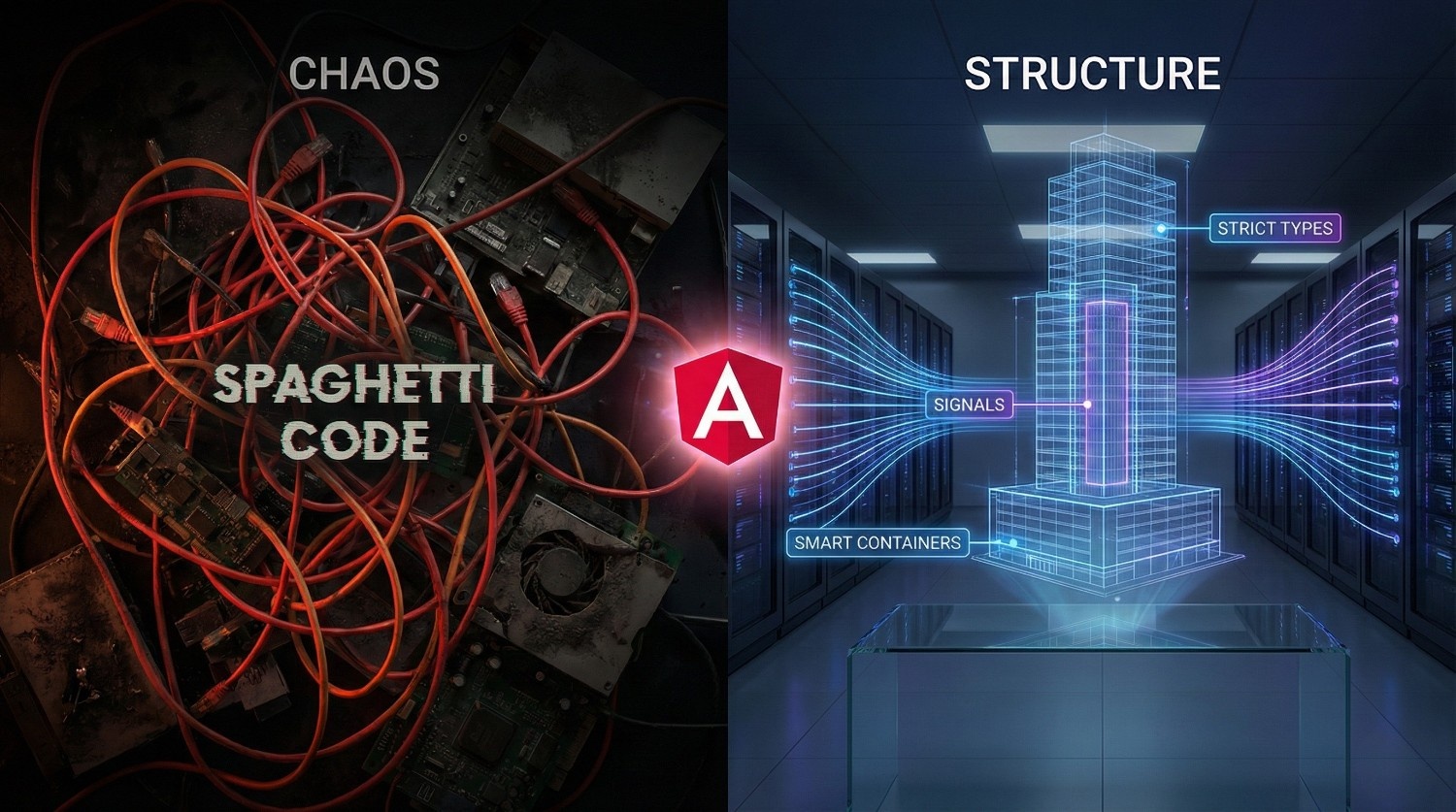
I’ve seen too many projects die_not because the idea was bad, but because the code became a nightmare to maintain. When I started building Future Door, I knew we couldn't afford "spaghetti code." We needed a specific architecture that could scale as the user base grew.
In the early days, I used to just throw components wherever they fit. Now? I treat my folder structure like a blueprint.
For me, the "Perfect Flow" in modern Web Development comes down to three non-negotiables:
1. Signals over Observables (Mostly)
With Angular 21, if you aren't using Signals for local state, you are writing legacy code. Signals are cleaner, faster, and significantly more readable than traditional RxJS behavior subjects for synchronous data. I still use RxJS for complex event streams, but for managing component state, Signals are the default.
2. The Container-Presentational Pattern (Smart vs. Dumb)
I strictly separate my logic (Smart/Container) from my UI (Dumb/Presentational).
- Smart Components: Handle data fetching, dependency injection, and state.
- Dumb Components: Don't know where data comes from; they simply rely on
@Input()to display data and@Output()to communicate events. This separation makes Unit Testing 10x easier and ensures your UI is reusable.
3. Strict Typing is a Religion
If I see any in a code review, I reject it immediately. TypeScript exists to save us from ourselves. Using strict: true prevents runtime errors that could crash the app in production.
Web development isn't just about writing code that works today. It's about writing code that my future self won't hate six months from now. If you're building a startup, stop optimizing for speed and start optimizing for sanity.