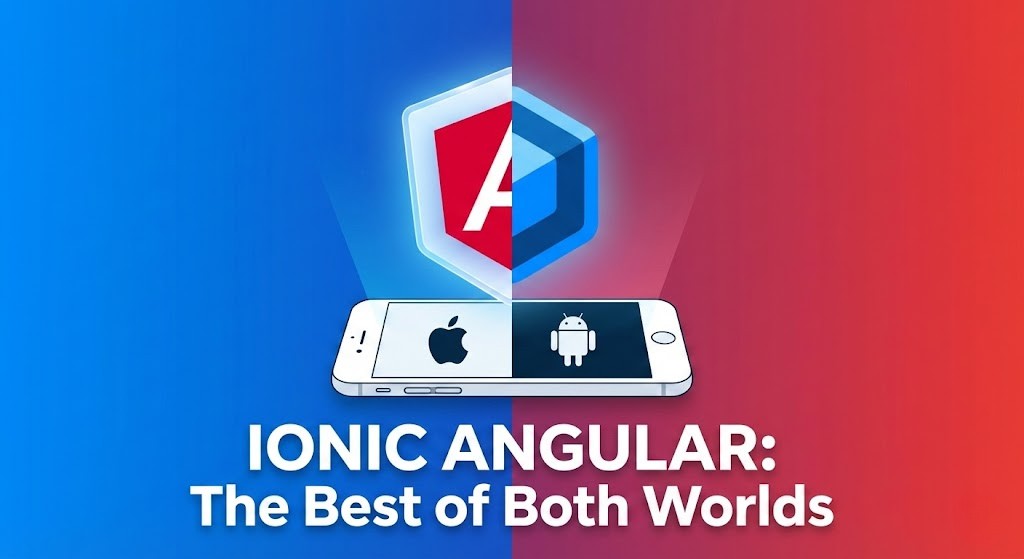
Hey everyone, Muhammad Nouman here.
If you are a developer like me, you probably love building things for the web. We know our way around HTML, CSS, and JavaScript. But then comes that moment when a client or your boss says, "Hey, we need a mobile app for this."
Usually, this is where the panic sets in.
Do I have to learn Swift for iOS? Do I need to learn Kotlin for Android? That’s two totally different languages and two different ways of working. Honestly, I just didn't have the time or energy to master two new worlds from scratch.
I wanted a way to use the skills I already had to build real, professional mobile apps.
That is when I decided to give Ionic Angular a serious try. It wasn't just another tool; it became my go-to solution for cross-platform development.
Here is a simple breakdown of why I chose it, and why I think it’s a great choice for developers in 2024.
1. It Uses the "Web Powers" I Already Have
This was the biggest selling point for me. Ionic isn't some weird new language. It is basically just standard web technology wrapped up nicely.
If you know how to build a website using Angular (or even just basic HTML/CSS/JS), you already know 80% of Ionic. You are essentially building a web app that behaves exactly like a native mobile app. I didn’t have to start from zero. I could just open my code editor and start working.
2. "Write Once, Run Everywhere" is Real
Before Ionic, the thought of maintaining two separate codebases (one for Apple, one for Google) sounded like a nightmare. If you fix a bug on the Android version, you have to remember to fix it on the iOS version too. Double the work, double the stress.
With Ionic Angular, I write one single codebase. That one set of code gets turned into an iPhone app, an Android app, and even a Progressive Web App (PWA). It saves tremendous amounts of time.
3. Why Angular Specifically? Structure.
Ionic also works with React and Vue, which are great. But I chose the Ionic Angular combination specifically.
Why? Because Angular is very structured. It has clear rules on how to organize your files, how to handle data, and how different parts of the app talk to each other. When you are building a big, complex mobile app, this structure is a lifesaver. It stops your code from becoming a messy plate of spaghetti. As a developer, I appreciate that discipline.
4. The UI Components look amazing out of the box
I am a developer, not a designer. Making buttons and lists look "native" on both iOS and Android is hard.
Ionic comes with pre-made UI components. You just drop in an
Final Thoughts
Is Ionic Angular perfect for every single app in the world? Maybe not. If you are building a super-intense 3D mobile game, you might need something else.
But for 95% of business apps, data-driven apps, and everyday tools, it is fantastic. It allowed me, Muhammad Nouman, to become a "mobile developer" without abandoning the web skills I love. If you are sitting on the fence about hybrid app development, give it a shot. You might be surprised at how fast you can build something amazing.